.jpg)


The Ultimate Guide to Finding the Right Office for You

Written by:Rabail Qassim,Interior Designer
Date published:
Last reviewed:
Navigating Office Selection for Your Business
Finding an office space in Qatar goes beyond securing a physical workspace, it provides the foundation for collaboration, scalability, and long-term business growth. Navigating local workspace options effectively requires evaluating spatial needs, location dynamics, and operational flexibility.
An office space is more than just a place to work; it is where brilliant minds collaborate to drive a business to new heights. However, finding the right space in Qatar's changing business landscape can feel like running through a maze because one size never fits all.
Drawing on Daya's experience across office fit-out and design projects in Qatar, this guide breaks the office search into seven practical steps, covering space requirements, budgeting, location, building features, workspace audits, lease terms, and working with the right professionals.
1. Business Requirements for Qatar Office Spaces
Every business has unique requirements. Before you start scouting for office spaces in Qatar, define what your business needs from its workspace. Ask yourself:
a) How Much Space Does Your Business Need?
Start by calculating the floor area required per employee. Based on Daya’s office-planning benchmarks, this may range from 9 to 15 sqm per person, depending on whether employees use dedicated desks, shared workstations or hybrid seating.
b) Which Office Layout Works Best For Your Team?
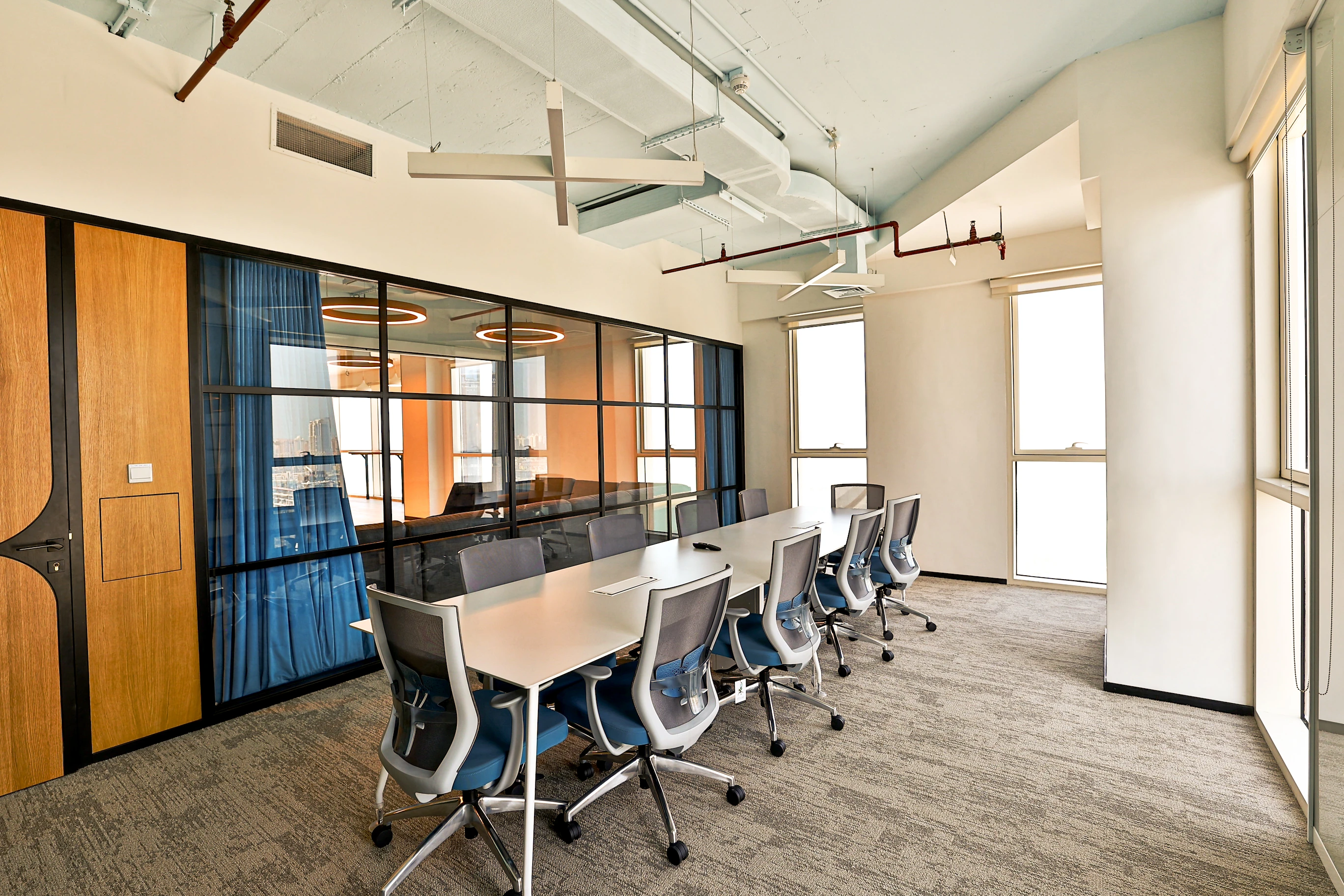
Open-plan offices can improve teamwork and communication, but they may also create distractions. A hybrid layout combining open workstations with enclosed offices provides a balanced solution for collaboration, privacy and focused work.
[Related article: The Type of Office For You]
c) How Quickly Is Your Business Expected to Grow?
If your business is scaling rapidly, look for offices with flexible lease terms or opportunities for future expansion. Avoid committing to a space that could restrict your long-term growth.
d) Does Your Office Need to Support Hybrid Work?
For businesses using hybrid or work-from-home arrangements, the office should support both in-person and virtual collaboration. Hot-desking areas, shared workstations, quiet zones and reliable collaboration technology can help employees who visit the office occasionally work effectively without requiring permanently assigned desks.
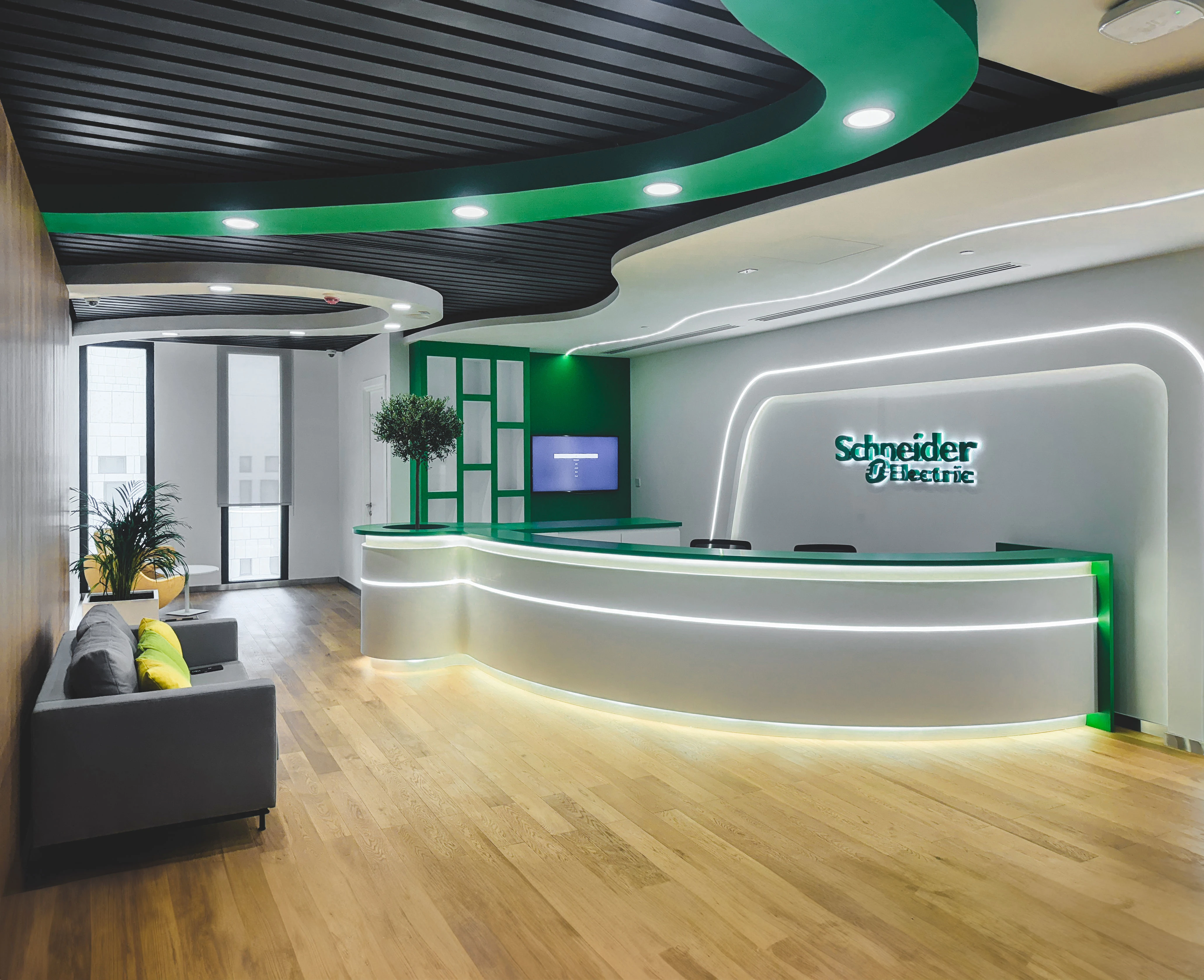
For example, during Schneider Electric’s 1,500 sqm office fit-out in Msheireb, Daya included features like personal lockers, phone booths, duo rooms, and bookable meeting spaces to support a flexible work culture.
2. How to Determine Your Budget for Renting an Office Space in Qatar
Once you have covered the business size requirement, next comes cost. Cost is one of the most critical aspects of making decisions in an office. Getting the balance right between costs and usability is crucial.
Office rental budgets in Qatar should account for fit-out costs per sqm (based on your chosen grade), monthly rent, and additional expenses like district cooling and shared facility costs. Getting this balance right between cost and usability is essential before committing to a space.
The following fit-out cost estimates per sqm are based on Daya's fit-out project experience in Qatar since 1988.
- Grade A (Premium Executive Spaces) – QAR 3,605/-
- Grade B (Balanced Office Upgrade) – QAR 2,640/-
- Grade C (Essential Office Setup) – QAR 2,112/-
The estimate above is just as a guideline. An accurate costing comes with a confirmed design & Bill of Quantity. Always remember to allocate 10-15% of this budget as contingency cost.
[Please refer to Daya’s fit-out guideline for our sample for costing]
a) Basic Monthly Rent and Operational Scope
Rental structures in Qatar vary in what they include. Some cover building electricity, janitorial services, or parking, while others leave general maintenance and common area costs as separate charges that can catch tenants off guard. Always confirm exactly what's included in the quoted rent before signing.
b) Additional Hidden Costs and Utilities
Office rental costs in Qatar may extend beyond the base rent, so clarify all service charges, utilities, and shared-facility arrangements before signing the lease. For example, in certain buildings, pantries and restrooms might not be included in the rentable area. While this can save you money, it also means relying on shared facilities, which might not always meet your standards for privacy or cleanliness.
Another common expense in Qatar is cooling, often provided by district cooling services like Qatar Cool. These systems are highly efficient and keep the building comfortably cool year-round, but the charges are usually billed separately. Being aware of these extra costs from the start can help you avoid surprises and ensure you're fully prepared for what lies ahead.
[Related Article: Guide to attributes of office spaces in Qatar]
c) Furnishing and Fit-Out Costs
Office set-up in Qatar comes in shell and core, semi-furnished, and ready to move in.
Shell and Core
An office space with only a shell and core requires a significant amount of fit-out work but is fully customizable to your preferred style, culture, and operations – with the least compromise.
Partially-Fitted
A partially-fitted office comes with a floor, ceiling, and MEP in place. Consider the wear and tear of the aged equipment. Alteration or replacement may be required, depending on the condition of the equipment. Cost savings are possible, but it comes with potential risk. Conducting an office audit will bring to surface any underlying issues and estimate the cost to fix it. As for other expenses, you’ll need to include the additional cost of installing desks, chairs, cabinets, lighting as well as interior design in your budget. However, the costs of these are realistically high if you are looking for designs that match your company's culture efficiently. Get in touch with Daya’s office interior fit-out specialists to avoid this hassle.
Ready to Move In
Ready to move in office spaces are available and are mostly provided by Co-Working business centre spaces such as Flare, Workoholics & Workington. It eliminates the risk factor as everything you see is what you get. However, be in the know that you will be paying a premium price. It may make sense for the short term, but in the long run, it is generally 100% more costly. It purely depends on your business priorities.
[Download Daya's Commercial Office Fit-Out Guideline to know how to budget an office fit]
d) Lease terms
Ideally, signing a longer lease gives you lower payment rates on a monthly basis. However, longer leases go against flexibility. If you choose flexibility, you pay a premium price. There is a 1-2 months penalty for early termination. You can negotiate with your landlord on this term. Daya suggests a deal that best adapts to your business requirements.
e) Reinstatement Requirements
Most locations will have a mandatory reinstatement requirement to its original condition when you sign the lease. Have this in mind when you plan to move out of the property.
3. Choose the Right Location
The right office location directly affects brand visibility, client accessibility, and employee satisfaction. Daya's own move from Old Airport Street to West Bay Excellence Tower significantly improved brand visibility, reinforcing Daya's position as a trusted name in the market. Be sure to weigh accessibility, nearby amenities, and future development plans before saying 'Yallah, let's sign this!'.
[Download Daya's Commercial Office Fit Out Guideline to learn more about different commercial zones in Doha]
a) Accessibility and Commuting:
Long commutes and limited parking are red flags when evaluating an office location. Employees arriving tired from a long commute or after struggling to find parking start the day at a disadvantage. So, prioritize locations close to public transportation, which is well-covered across Qatar via bus, metro, and tram. Your company can save on transportation costs.
b) Local Facilities and Amenities in Proximity:
Access to local restaurants, fitness centres, childcare centres, and other amenities helps employees strike a better work-life balance — something Qatar's diverse work culture prioritizes. If you have a 'Karak' booth nearby, that's a major plus point!
c) Prospective Developments:
Future building developments near your office can cut both ways, raising the area's value, but also bringing noise, disturbance, and pollution during construction. Examine real estate trends and zoning plans to avoid surprises, and keep a lookout for well-known brands or companies in the area, since strong neighbours can elevate your own brand value too.
Pro-Tip: Speak to your potential neighbours before signing the lease. Ask them about the pros and cons of the location. This will give you a general idea on how the neighbourhood actually is.

4. Evaluate the Building’s Features
The building itself plays a significant role in creating a comfortable and efficient workspace. When touring potential offices, lean into these factors to ensure you have everything covered.
a) Facilities and amenities:
If you have a small team, the office building should have basic amenities covered such as elevators, ample parking facilities, and a shared pantry. For larger teams, on-site fitness centres or event spaces can be a bonus.
b) Safety and security:
Ensure the building is protected by a 24-hour surveillance system, appointed 24/7 security personnel on site, and foolproof emergency exits.
c) Internet connectivity:
High-speed internet is non-negotiable. Most of Qatar has coverage from both Ooredoo and Vodafone, though some areas are only served by one provider, so test the actual network speed and coverage on-site rather than assuming. Also check if the space is 5G ready, and confirm the infrastructure supports stable connections for cloud systems or video calls.
d) Flexibility of Landlord and Building Management:
A flexible landlord can save you money and hassle over time, negotiating on pricing, adding amenities like extra parking, or covering maintenance costs that would otherwise fall on you. Check what provisions they offer upfront, and how open they are to adjusting terms as your needs change.
5. How to Conduct a Workspace Audit Before Renting an Office Space in Qatar
Once you’ve narrowed down potential spaces, it’s then time to conduct a detailed audit of each option. A detailed inspection of the space will determine the extensive need for fit-out work at the site. Invite an interior design & fit-out company to do a full audit on the "health" of the space.
a) Natural light:
Natural light boosts mood, energy, and productivity, while also reducing energy costs — making it both a wellbeing and sustainability choice. Choose offices with ample windows and adjustable lighting fixtures to maximize it. For example, in the 680 sqm Cybersecurity Command Centre fit-out for MCIT in West Bay, Daya used glare-free lighting and warm material finishes to reduce eye strain during extended, high-focus shifts.
[Related Article: Guide to Office Lighting]
b) Ventilation and HVAC systems:
The air quality in the building has to be optimal. Poor ventilation can cause discomfort and health issues in the long run, contributing to low productivity and employee downtime.
c) Acoustics:
Open-concept offices often struggle with noise control, which can affect focus and comfort. Check whether the space includes acoustic panels, ceiling treatments, or the flexibility to install noise-reducing solutions.
d) Technology:
Technology infrastructure directly affects fit-out cost and timeline. Exposed or unfinished wiring is a sign the space will need significant electrical work before move-in. Collaborate with landlords to assess wiring setups, and consider offices with raised floors or underfloor trunking to keep cabling concealed and reduce fit-out costs.
Recently built office spaces might have existing technology infrastructure such as:
- BMS (Building Management System): serves as a central control point for all facilities and monitors usage.
- CCTV & Access Control System: may already be equipped with surveillance and entry systems. Remember to request access, including passcodes and any interfacing applications.
Pro-Tip: Check the age of the building. A newer building will generally have lesser ‘mileage’ and hence lesser issues.
.jpeg)
6. Consider the Lease Agreement
Before signing a commercial lease, confirm the lease duration, fit-out flexibility, additional provisions and the building management’s service standards. Seek legal advice where necessary.
a) Duration:
The lease term should align with your projected business timeline and growth plans. Avoid committing to a longer term than your business requires unless the agreement provides suitable flexibility.
b) Flexibility:
Some landlords allow for space modifications or expansions during the lease term, often through a grace period that can be used as part of the fit-out timeline. Grace periods are common in Qatar's commercial leasing market, typically a minimum of 2 months for semi-furnished spaces and up to 6 months for shell & core spaces, though exact terms vary by landlord and building. Ask about these provisions and be clear from the start.
c) Know Your Landlord/Servicing Agent & Facilities Management Company:
A building's communal areas often say more about its management than any lease clause. Does it look 'tired' (dirty windows, worn finishes, poorly maintained fixtures)? Check how frequently windows, shared spaces and building systems are maintained.
Speaking with existing tenants can also provide useful insight. Ask about the landlord's flexibility, the facilities-management team's responsiveness and how quickly maintenance issues are resolved.
d) Exit terms:
Unexpected business changes might require relocation. Understand the penalties for breaking the lease early or subleasing options.
7. Work with Professionals in Qatar
Partnering with local real estate agents, architects, and commercial fit-out experts like Daya saves time, prevents costly mistakes, and gives you direct access to specialized project management expertise.
Here’s what you can do:
- Assemble your internal team first. Define your operations, work culture, and spatial requirements, then frame a clear brief.
- Bring in a real estate agent to shortlist suitable spaces.
- Engage a commercial interior designer to tap into their fit-out expertise.
Conclusion
Choosing the right office space in Qatar requires a balance of business requirements, location, total occupancy costs, building condition, lease flexibility and fit-out potential. Reviewing these factors before signing a lease helps prevent unexpected expenses and ensures the workplace can support your team, operations and future growth.
Quick Recap: How to Find the Right Office Space in Qatar
- Understand Your Business: Define your headcount, work patterns, spatial requirements and expected growth.
- Plan the Full Budget: Account for rent, service charges, utilities, fit-out costs and a suitable contingency.
- Choose the Right Location: Consider accessibility, parking, public transport and nearby amenities.
- Audit the Building and Workspace: Review natural light, HVAC, acoustics, technology infrastructure, access and shared facilities.
- Review the Lease Carefully: Confirm the duration, modification rights, grace period, exit terms and responsibilities of the landlord and facilities-management company.
- Work with Local Professionals: Involve real estate, legal, interior-design and fit-out specialists before committing to a space.
A well-designed and built office gives the impression of a stable & reliable company. A co-working space or a mediocre office may give the impression that the company is 'temporary' and 'not invested'.
Ready to transform your workspace into a hub of productivity and innovation?
Connect with Daya’s office design and fit-out team in Qatar to discover how the perfect office space design can elevate your business! Let’s create a space that works for you.
- Phone: +974 3365 0805
- Email: hello@wearedaya.com
- Address: 2603, Excellence Tower, Al Shatt St, Westbay, Doha, Qatar
- For more information, visit Daya's website: www.wearedaya.com
Frequently Asked Questions
How much office space do I need per employee in Qatar?
Based on Daya’s office-planning benchmarks, businesses may require around 9 to 15 sqm per employee, depending on whether the workplace uses dedicated desks, shared workstations or hybrid seating. The right figure also depends on meeting rooms, support spaces and future growth requirements.
What costs should I consider when renting an office in Qatar?
Look beyond the monthly rent. Your budget should also consider fit-out costs, service charges, utilities, district cooling, shared facilities and a suitable contingency. Daya recommends confirming exactly what the landlord includes before committing to the space.
What should I check before renting an office space in Qatar?
Check the building condition as carefully as the location. Review natural light, HVAC, acoustics, internet and technology infrastructure, parking, security and shared facilities before signing the lease. A workspace audit can help identify problems that may later affect your fit-out cost or timeline.
Is a shell-and-core, partially fitted or ready-to-move office better?
It depends on your priorities. Shell-and-core spaces offer the most design freedom but require more fit-out work, while partially fitted offices may reduce initial work but should be checked for ageing systems or finishes. Ready-to-move offices are convenient, but usually offer less flexibility to create a workplace around your own brand and operations.
How can I choose an office that will support future business growth?
Look for a space that can adapt as your headcount and working patterns change. Flexible lease terms, opportunities for expansion, shared workstations, hot-desking, quiet zones and collaboration spaces can make it easier to support future growth or hybrid working without relocating too soon.
0.jpeg)

.png)
.jpg)
.jpg)


.jpg)


.jpg)
.jpeg)

edited.jpg)